
A technical buyer’s guide to the SJ55 PP straw making machine, its 55 mm extrusion line, equipment scope, and pre-order checks.
An SJ55 PP straw making machine is more than a 55 mm extruder. The screw and barrel prepare the molten polypropylene, while the die, cooling section, haul-off, cutting unit, and straw collection equipment work together to produce consistent finished straws. A quotation that lists only the extruder model does not tell a buyer enough about the complete production line.
This guide uses one SJ55 line configuration for PP drinking straws as a practical reference. It explains the quoted specifications and what to verify before treating them as a production commitment. The figures describe a particular configuration, not a universal specification for every SJ55 machine.
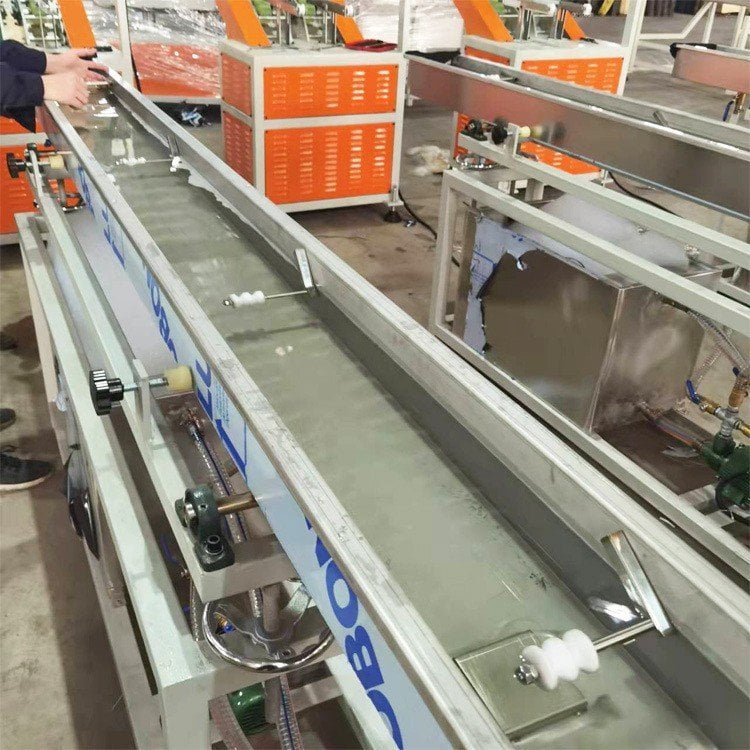
SJ55 PP Straw Making Machine Specifications at a Glance
| Item | Reference configuration | What to check before ordering |
|---|---|---|
| Material | PP granules | Confirm the actual material grade and product requirements |
| Extruder model | 55 mm screw, 30:1 L/D | Match the machine to straw dimensions and target output |
| Screw and barrel material | 38CrMoAlA | Confirm surface treatment and maintenance requirements |
| Screw treatment | Nitriding and polishing | Ask how the screw is prepared for the intended PP grade |
| Barrel inner surface | Nitriding and grinding | Review the specified barrel construction |
| Extruder motor power | 15 kW | Do not confuse motor rating with total line power demand |
| Motor control | Variable-frequency control | Confirm the proposed control arrangement |
| Heating control | 7 zones | Check control and sensing arrangements in the final design |
| Barrel cooling | 4 cooling zones; 4 × 120 W fans in the quoted design | Confirm exact fan and temperature-control equipment |
| Cooling water tank | 4.5 m, stainless steel | Confirm layout, water supply, and site space |
| Haul-off power | 1.5 kW | Ask how stable pulling is maintained for the target straw |
| Cutting-unit power | 0.75 kW | Confirm cutting accuracy for the required length |
| Reference output | 400–800 straws/min | Depends on straw size, wall thickness, material, setup, and operating conditions |
| Power supply in this quotation | Three-phase, 440 V | Voltage and electrical specification can be customized for the destination |
Important: The 400–800 straws/min figure is a reference output for the quoted SJ55 PP straw configuration. It is not a guaranteed rate for every diameter or wall thickness. Ask for a trial or sample confirmation tied to your actual product.
1. The 55 mm Extruder Is the Starting Point, Not the Whole Line
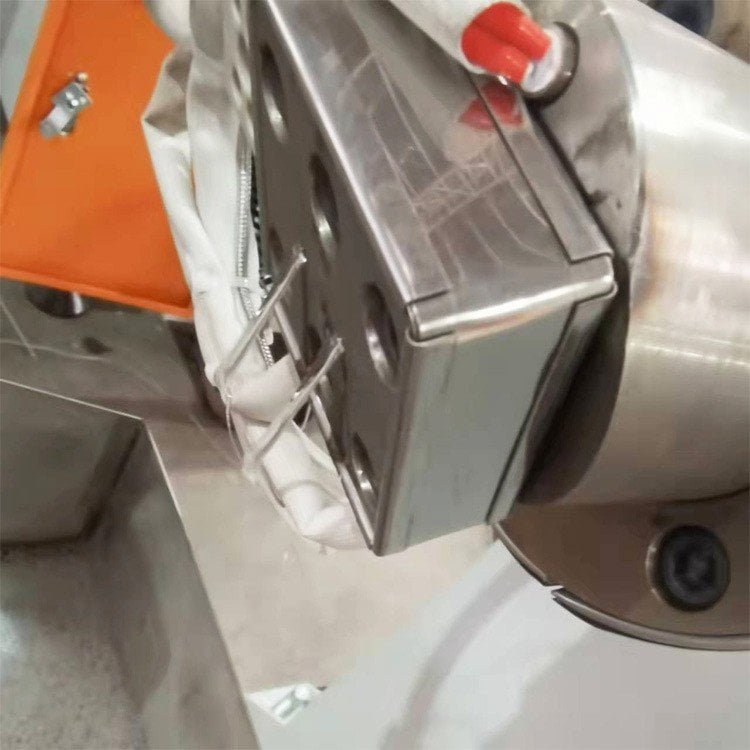
The reference SJ55 extruder uses a 55 mm screw with a 30:1 length-to-diameter ratio. Both screw and barrel are specified in 38CrMoAlA. The screw receives nitriding and polishing treatment, while the barrel’s inner surface is nitrided and ground. The quotation lists a hard-tooth-surface gearbox, helical gearing, and a pressure lubrication system.
These details help buyers compare the mechanical construction of different quotations. They do not, by themselves, determine the number of acceptable straws leaving the cutting unit. Material behavior, melt stability, die selection, cooling, haul-off, and finished-product tolerance all influence the result.
The quoted main motor rating is 15 kW with variable-frequency control. This is the extruder motor specification, not the total installed power or electricity consumption of the complete production line. When planning a factory, request an electrical load list for every included unit rather than budgeting from the extruder motor alone.
2. Temperature Control Matters to a Stable PP Extrusion Process
The reference control arrangement includes seven heating-control zones, plus four barrel-cooling zones with four 120 W cooling fans. The electrical cabinet is an integrated design in the supplied quotation.
For buyers, the important question is not simply how many zones appear on a datasheet. Ask how temperatures are monitored, how the barrel responds to process changes, and how operators will recognize and correct unstable running conditions. Appropriate settings depend on the PP material and operating setup; they should be established during commissioning rather than copied from an unrelated project.
3. The Die Must Match the Straw You Intend to Produce
The sample equipment list includes one extrusion die set, configured around the customer’s product shape and dimensions. A technical inquiry should therefore begin with the straw, not merely with the extruder model.
Share the outside diameter, wall thickness, finished cut length, straight or flexible design, and any special cut-end requirements. If you plan to make several diameters, list the full range and ask which changes can be made with inserts or adjustments and which require additional tooling. A single die specification should not be interpreted as a promise that every possible straw size can be produced without changeover.
For flexible drinking straws, also confirm the need for a separate bending or corrugation process. The basic extrusion line and the flexible-straw forming equipment are not the same unit.
4. Cooling, Haul-Off, and Cutting Determine Usable Output
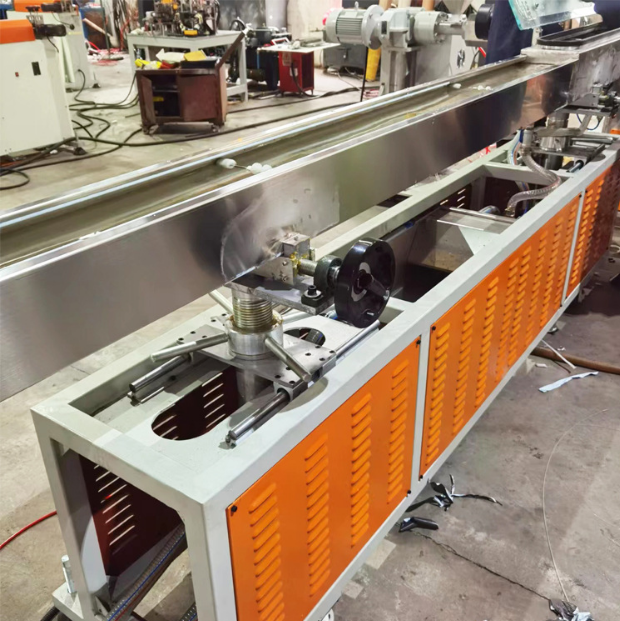
The reference SJ55 configuration includes a 4.5 m stainless-steel cooling water tank, a four-wheel haul-off and cutting unit, and a straw finishing or collection unit. The quoted haul-off drive is 1.5 kW, and the cutting-unit drive is 0.75 kW, with variable-frequency control specified for the relevant drives.
- Cooling and sizing: help the extruded PP take shape before downstream handling.
- Haul-off: pulls the product at a coordinated rate. Instability here can affect dimensions.
- Cutting: converts continuous extrusion into ordered lengths. Check acceptable length variation and cut quality.
- Collection or finishing: manages finished straws after cutting. Confirm what the quoted unit does and how it interfaces with packing operations.
A line may run quickly yet produce excessive rejects if pulling, cooling, or cutting are not matched to the straw specification. Acceptance discussions should include saleable output, cut quality, and dimensional consistency—not just the highest speed displayed on a control screen.
5. What Does 400–800 Straws per Minute Really Mean?
The quotation gives 400–800 pieces per minute as the SJ55 PP straw line’s reference production range. This is useful for initial discussions, but incomplete without the product and test conditions.
Before comparing that range with another offer, ask:
- Which straw diameter, wall thickness, and cut length were used for the stated output?
- Which PP grade and operating setup were assumed?
- Does the figure refer to running speed or acceptable finished straws after rejects?
- How are changeovers, startup waste, and routine stoppages treated in the estimate?
- Can the proposed configuration be demonstrated using your drawing or representative sample?
Do not multiply the headline rate into daily output without allowing for real production conditions. A realistic capacity plan includes startup, size changes, inspection, maintenance, and packing arrangements. Discuss the target output together with the finished product specifications.
6. What Should Be Included in an SJ55 Line Quotation?
The SJ55 PP straw making machine quotation lists five principal equipment groups:
| Equipment group | Quantity in sample scope | Buyer verification |
|---|---|---|
| SJ55 extruder with controls | 1 set | Screw, barrel, gearbox, motor, and electrical specifications |
| Extrusion die | 1 set | Straw dimensions and any additional tooling |
| Cooling water tank | 1 set | Length, construction, plumbing, and site layout |
| Four-wheel haul-off and cutting unit | 1 set | Pulling control, cut length, and acceptance criteria |
| Straw finishing/collection unit | 1 set | Collection method and connection to downstream packing |
This is a reference supply scope, not a statement that every quotation automatically includes all auxiliary equipment. Ask for a written list of inclusions, exclusions, spare parts, electrical requirements, installation services, and trial-run arrangements.
The sample quotation specifies three-phase 440 V, but destination-market voltage and electrical requirements should be confirmed and customized where necessary. Do not order on the assumption that a quoted electrical configuration matches your factory.
7. SJ55 Versus a Larger Straw Extruder
The SJ55 reference is useful when examining a 55 mm PP straw extrusion line, but buyers may also be offered larger equipment. A larger screw does not automatically mean better value for every order. Compare whether the complete configuration can produce your intended product range at an acceptable quality and operating cost.
Compare proposals against the same straw specifications, output target, utilities, downstream scope, changeover needs, and acceptance method. For a broader overview of selection factors, read our PP drinking straw machine buyer’s guide. You can also review our plastic straw making machine solutions.
8. What to Confirm Before Factory Acceptance
Before shipment, agree with the supplier on what will be checked during the trial run. Useful checkpoints include:
- Finished straw outside diameter, wall thickness, and cut length against the approved drawing.
- Appearance and cut-end quality using agreed samples.
- Stable running of extrusion, cooling, haul-off, and cutting equipment.
- The test material, test duration, and how acceptable output will be recorded.
- Tooling, spare parts, operator instructions, and the final packing list.
Plextrud can coordinate equipment configuration and trial-run confirmation for the proposed line. For complete extrusion lines, overseas installation, commissioning, and operator training can be arranged; the exact service scope and technician travel and accommodation costs should be stated in the quotation. For standalone components or tooling, service terms differ and should be confirmed separately.
 English
 Español de México
 Português do Brasil
 Tiếng Việt
Join the Conversation
Have questions about this topic, or want to share your experience with extrusion lines? We read every comment and reply personally -- your insight helps the whole community.
Your thoughts matter -- share what's on your mind and help others in the industry.